Package of Four Bills Would Protect Firefighters from Cancer-Linked “Forever Chemicals”
Fire Department City of New York/Facebook
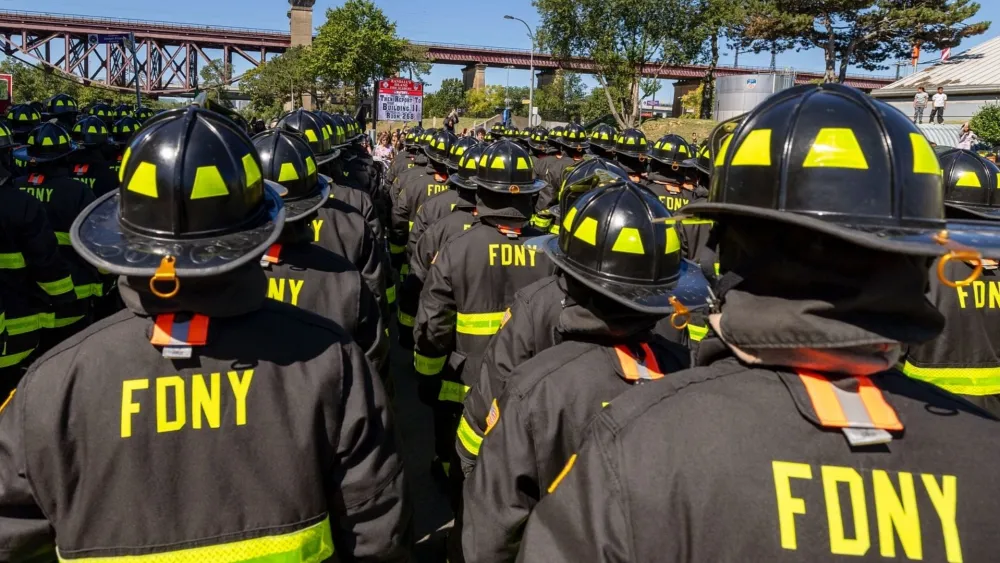
NEW YORK CITY — New York City lawmakers are weighing broad legislation to shield firefighters from exposure to cancer-linked “forever chemicals” in their protective gear. A four-bill package introduced on Nov. 17 by Council Minority Leader Joann Ariola would require the Fire Department of New York to phase out turnout gear and other protective equipment containing per- and polyfluoroalkyl substances, also known as PFAS, by 2028.
The legislative initiative tackles one of the most serious occupational health threats facing the nation’s largest fire department, where cancer now tops the list of causes of death among firefighters.
Protecting the Protectors
“This is about protecting our protectors,” said Ariola, who chairs the Fire and Emergency Management Committee. “Our firefighters risk their lives for us each day. The least we can do is make sure the gear meant to keep them safe isn’t slowly poisoning them.”
The PFAS have been used in firefighting protective clothing since the 1970s due to their heat and water resistance. These synthetic chemicals are found practically in all the components of current firefighting gear, especially in bunker gear and boots, used as durable water repellents on outer shells and moisture barriers.
Comprehensive Legislative Package
The four bills in the package contain several key provisions:
Phasing Out Equipment: The bill would require the FDNY to phase out the use of PFAS in turnout gear and all protective equipment by the end of 2028. The department would be responsible for identifying and adopting safer alternatives.
Health Screening Programs: The package would provide active firefighters with free annual health screenings for PFAS exposure and twice-yearly examinations for FDNY retirees.
Water Testing: All NYC firehouses would have their drinking water tested for PFAS contamination, addressing concerns that the chemicals can leach into plumbing systems.
The Challenge of Finding Alternatives
Bobby Eustace, vice president of the Uniformed Firefighters Association, describes that the FDNY hasn’t identified any PFAS-free equipment to date with comparable burn protection to the current gear.
“This gear needs to be phased out. Cancer is the No. 1 killer of firefighters,” Eustace said, stating the painfully obvious point and recognizing how complex the solution is.
The overall cost to replace PFAS-containing gear throughout the FDNY is not known. The department did not respond to requests for comment on the proposed legislation or cost estimates.
Broader Context of PFAS Litigation
The legislative push comes as manufacturers of PFAS-containing products are facing growing legal action. Manufacturers are currently confronting class-action lawsuits from thousands of plaintiffs, including some FDNY firefighters, who say they developed serious health problems either from skin contact with contaminated gear or from using PFAS-based aqueous film-forming foam, or AFFF. While the FDNY stopped using PFAS-containing firefighting foam decades ago, the chemicals remain prevalent in personal protective equipment.
Settlements over drinking water contaminated by PFAS pollution have surpassed $18 billion in the United States as of 2024, according to an analysis by Verisk Analytics.
New York State’s Current PFAS Limitations
The bill being considered by the NYC Council would supplement existing regulations issued at the state level. New York State adopted legislation in May 2025 that banned the use of intentionally added PFAS in firefighting personal protective equipment, starting from January 1, 2028.
Ariola pointed out an apparent inconsistency: “New York State is a non-PFAS state, so if you even want to order boots to go out in the rain with, if they have PFAS, you can’t have them ordered to New York. Yet we have our firefighters wearing full gear that contain PFAS.”
By January 1, 2025, New York banned the sale of apparel containing intentionally added PFAS, with extensions to 2028 for outdoor apparel designed for severe wet conditions. However, these bans include exemptions for professional uniforms designed to protect wearers from health or environmental hazards, including personal protective equipment used by firefighters.
National Movement and Standards Evolution
The New York City legislative effort mirrors a larger national movement to take on PFAS in firefighting equipment. The National Fire Protection Association, or NFPA, has included PFAS-related provisions into NFPA 1970, including optional labeling requirements based on total fluorine concentrations of no more than 100 ppm.
California’s rules, which started coming into effect at the beginning of 2025, cap TOF for textile products at 100 ppm, with a further reduction to 50 ppm scheduled for early 2028.
Implementation Challenges and Timeline
The legislation, if passed, would give the FDNY roughly three years to identify and procure PFAS-free protective equipment that meets safety standards. Key challenges include:
Product Development: Manufacturers are required to develop and test alternatives that provide equivalent protection without PFAS chemicals.
Safety Certification: New equipment will have to withstand stringent NFPA standards on thermal protection, water resistance, and durability.
Cost Considerations: The financial impact of replacing protective equipment for thousands of firefighters has yet to be estimated.
Looking Ahead
The bill now before the NYC Council represents a serious commitment to the health and safety of firefighters. A vote by the City Council could have significant influence on similar efforts in other major cities and might accelerate the broader transition away from PFAS in firefighting equipment nationwide.
The bill gives hope to the approximately 11,000 uniformed firefighters with the FDNY and thousands more who have retired that, perhaps, future generations might not have the same heightened cancer risk. Whether that promise can be fulfilled while sustaining the protection those firefighters most decidedly need remains the central challenge as New York City forges ahead in this ambitious undertaking.