Provisional deal updates lists of priority pollutants for the first time in more than a decade, with increased monitoring requirements and longer compliance deadlines.
BRUSSELS – The European Union has reached a provisional political agreement on comprehensive new water quality standards that will significantly expand the monitoring and regulation of harmful pollutants in European rivers, lakes, and groundwater. The 23 September 2025 deal between the Council presidency and representatives of the European Parliament marks the first major update to EU water pollution standards in over a decade.
The agreement slaps new, strict limits on pesticides, pharmaceuticals, bisphenols, and per- and polyfluoroalkyl substances-also known as the notorious “forever chemicals” that last indefinitely in the environment. However, member states secured extended compliance deadlines up until 2039 and possibly to 2045, a timeline that has seen environmental organizations immediately attack the plan for being unable to address the urgency over water contamination.
“This agreement ensures that Europe’s water legislation keeps pace with science and emerging pollutants,” said Magnus Heunicke, Denmark’s Minister for Environment and Gender Equality. “It strikes a careful balance between ambition and flexibility for member states, while strengthening the protection of our rivers, lakes and groundwater. Above all, it safeguards the health of EU citizens and future generations by reducing exposure to harmful chemicals in our water.”
Expanding the Priority Pollutant List
The interim directive updates environmental quality standards for many known pollutants, adding new substances to the priority lists according to current scientific evidence. Some of the key additions include:
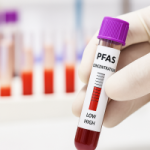
PFAS (Forever Chemicals): The rule sets limits on the total level of 24 PFAS compounds in surface water, adding TFA, a degradation product of some PFAS, to the original proposal. Also known as forever chemicals, these substances have been used everywhere from non-stick cookware to firefighting foam, and have been associated with the development of cancer, hormonal disruption, and compromised immune systems.
Pesticides: A general limit of 0.2 micrograms per liter has been introduced for pesticides in surface waters, which will apply to those already listed as priority substances. The inclusion is indicative of the growing concern about the cumulative effects arising from a number of different pesticide residues in water.
Pharmaceuticals: For the first time, individual limit values will apply to pharmaceutical substances, including painkillers, anti-inflammatory drugs, and antibiotics, which reach the water system through human and veterinary use.
Bisphenol-A: This priority hazardous substance designation is given to a common plasticizer found in plastic packaging and consumer products; research has shown that it exhibits endocrine-disrupting properties.
Meanwhile, substances that are no longer relevant at the EU level are being deselected; the pesticide atrazine is one example. Standards for other existing pollutants are being made more stringent where current scientific understanding warrants this.
Status Quo of Water Quality in Europe
The need for updated standards is stark. Currently, under the Water Framework Directive and its main implementation tool, the River Basin Management Plans, 46% of surface waters and 24% of groundwater in the EU are failing to achieve good chemical status. There are huge disparities among member states, with some countries having significantly higher levels of pollution than others.
The most frequent pollutants in causing non-compliance include mercury and PAHs, ubiquitous persistent, bioaccumulative, and toxic substances resulting from both legacy pollution and ongoing atmospheric emissions from fossil fuel combustion. The challenge of addressing these pervasive contaminants has complicated efforts to achieve the EU’s goal of good chemical and ecological status for all water bodies.
Enhanced Monitoring and Reporting Framework
Beyond revising pollutant standards, the agreement substantially strengthens and streamlines monitoring obligations for member states. The new requirements seek to enhance the transparency of water quality across the EU while avoiding excessive administrative burdens:
More Frequent Reporting: Member states shall report on the biological quality data of the aquatic ecosystem health every three years, and chemical quality data for both surface water and groundwater every two years. Member states may report chemical data on a voluntary basis annually. Overall water body status reporting remains on a six-year cycle, aligned with river basin management planning.
Effect-Based Monitoring: The main innovation of the reform will be the introduction of effect-based monitoring for surface waters. While traditional monitoring focuses on individual chemicals, EBM evaluates the overall effect of mixtures of pollutants on ecosystems and organisms. This is a far more sophisticated approach that can reveal harmful “cocktail effects”-that is, mixtures of chemicals may well be more hazardous than the individual constituents. Limited and targeted use of EBM will be made obligatory within a period of two years for estrogenic substances.
Watch List Expansion: A binding groundwater watch list will force member states to screen pollutants of emerging concern, while the existing surface water watch list already does so. That mechanism will monitor substances like microplastics and antimicrobial resistance genes as soon as tests that provide comparable results across the EU are developed.
Joint Monitoring Facility: In order to support the Member States in the development of new methods and monitoring of the expanded list of priority substances, this agreement allows for a voluntary joint monitoring facility at EU level. The European Commission will explore options concerning its establishment, financing, and operation. All interested member states may have access to that facility.
Implementation Timeline and Flexibility
The new standards for both surface water and groundwater would have to be complied with by member states up until 2039, while an additional, strictly conditioned extension would be made possible up to 2045. In the case of substances with revised, more stringent environmental quality standards in surface water, the compliance deadline is 2033.
The extended timelines represent a compromise between environmental ambition and member state concerns about implementation costs and technical feasibility. However, environmental groups argue the delays are excessive given the well-documented health and ecological risks posed by these pollutants.
The provisional agreement now needs to be endorsed by the Council and Parliament before it can be formally adopted. Once in force, Member States will have until 21 December 2027 to transpose the directive into national law.
Controversial Exemptions and Non-Deterioration Principle
The Water Framework Directive already imposes an obligation on member states to prevent deterioration in water body status. So far, this obligation was worded generally and interpreted in detail by Court of Justice case law. The new agreement inserts a definition of deterioration, which is in line with existing jurisprudence, but it introduces two additional exemptions:
- One for a short-term temporary deterioration
- Another for cases where pollution is relocated without increasing the overall loads
These exemptions have been sharply criticized by environmental groups as undermining core water protection principles.
Environmental Groups Express Concerns
Environmental groups gave mixed receptions to the accord. While welcoming updated standards, many expressed frustration with delays in implementation and new exemptions.
“After over three years of negotiations, the EU finally agreed to updated standards on water pollution-a much-needed step forward,” said Sara Johansson, senior policy officer for Water Pollution Prevention at the European Environmental Bureau. Yet she and other advocates decry the extended deadlines for compliance as well as new exemptions as an inadequate response to the crisis in water pollution.
Claire Baffert of the WWF said: “Last night’s deal is a direct attack on access to clean water and our environment, letting companies dump more toxic substances into our rivers.” She warned that some industry lobbies continue pressuring the European Commission to further weaken Water Framework Directive protections.
Manon Rouby of Pesticide Action Network Europe highlighted specific concerns about TFA, a PFAS pesticide residue that may be toxic to reproduction: “All over Europe, our waters are polluted with TFA. By not acting to ban these substances immediately from all types of water bodies, the EU misses a significant opportunity to take water and health protection with the importance and urgency it requires.”
Extended Producer Responsibility Considerations
Discussions around the legislation also included potential mechanisms of extended producer responsibility-those that would require polluting industries to help cover some of the costs of water monitoring programs. Though not implemented in their entirety within the final agreement, that concept represents a growing cognizance that polluters should bear greater financial responsibility for contamination they cause.
Scientific Basis and Continuous Review
This agreement aligns EU water policy with the latest scientific evidence on the risks of pollutants and their impacts on the environment. Priority substance lists should be revised every six years; the last updates were made in 2013 and 2014 for surface and groundwater, respectively, so this revision is overdue.
Furthermore, EU-wide groundwater standards for pesticides and nitrate have not been updated since the adoption of the Groundwater Directive in 2006; therefore, regular updates are needed because scientific understanding of the issue is evolving, and new contaminants are emerging.
Broader Context of EU Water Policy
This agreement constitutes one element of the EU’s broad-ranging efforts and actions related to water challenges. A Water Resilience Strategy, currently under development by the European Commission, is expected in 2025; it will tackle water efficiency, scarcity, and pollution and water-related risks through a multi-annual cross-sectoral plan with milestones for 2030 and 2040.
Recent Eurobarometer surveys show that European citizens consider pollution, overconsumption, and climate change the main threats to water quality and support additional EU measures. Almost no major economic sectors are seen by the respondents as doing enough to use water efficiently.
The European Parliament has called for comprehensive EU water strategy development, while the European Economic and Social Committee and Committee of the Regions have advocated for an “EU Blue Deal.” The European Council committed in its 2024-2029 strategic agenda to strengthening water resilience across the Union.
Looking Ahead
As the provisional agreement moves toward formal adoption, attention will shift to implementation challenges. Specifically, member states will need to develop monitoring programs for expanded pollutant lists, possibly establish or join the new joint monitoring facility, and plan pathways toward compliance within the prescribed timeline.
Success for this agreement will ultimately be measured not by its ambition on paper, but by improvements in actual water quality across Europe’s rivers, lakes, and aquifers. Nearly half of EU surface waters currently are failing to meet good chemical status, so the journey from policy to clean water remains considerable.
The agreement contains both promise and frustration for European citizens concerned about water quality, promising more comprehensive monitoring of pollution and a set of stringent standards, yet frustration with implementation timelines that will mean any tangible improvements may lie upwards of ten years into the future.
Source Information: European Council press release: “Water pollution: Council and Parliament reach provisional deal to update priority substances in surface and ground waters,” September 23, 2025 (updated October 9, 2025). For further information, please visit: www.consilium.europa.eu