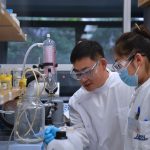
Chicago, IL, September 25, 2025 — Researchers at the University of Chicago Pritzker School of Molecular Engineering (UChicago PME) and Argonne National Laboratory have developed a revolutionary handheld sensor that can detect “forever chemicals” in water within minutes, offering a dramatic improvement over traditional testing methods that can take weeks.
Unprecedented Detection Sensitivity
The portable device, described in the journal Nature Water, can detect PFAS at concentrations as low as 250 parts per quadrillion (ppq)—equivalent to finding one grain of sand in an Olympic-sized swimming pool. This extraordinary sensitivity falls well below EPA’s proposed regulatory limits of 4 parts per trillion for the most toxic PFAS compounds, PFOA and PFOS.
“Existing methods to measure levels of these contaminants can take weeks, and require state-of-the-art equipment and expertise,” said Junhong Chen, Crown Family Professor at UChicago PME and Lead Water Strategist at Argonne National Laboratory. “Our new sensor device can measure these contaminants in just minutes.”
How the Technology Works
The sensor employs a silicon chip-based field-effect transistor with specially designed molecular probes. When PFAS molecules attach to these probes, they alter the electrical conductivity flowing across the chip’s surface, producing a measurable signal that indicates contaminant concentration.
The breakthrough lies in the probe design. Rather than trial-and-error development, the research team utilized machine learning algorithms to predict which molecular structures would selectively capture specific PFAS chemicals while ignoring other common water contaminants.
“In this context, machine learning is a tool that can quickly sort through countless chemical probes and predict which ones are the top candidates for binding to each PFAS,” Chen explained.
In 2021, the team won a Discovery Challenge Award from the UChicago Center for Data and Computing to support their use of artificial intelligence in designing PFAS probes.
“Even though they are typically present at miniscule concentrations, PFAS do have certain molecular characteristics that differentiate them from other things dissolved in water, and our probes are designed to recognize those features,” said Seth Darling, Senior Scientist at both Argonne and UChicago.
Advantages Over Current Methods
The gold standard for PFAS detection is liquid chromatography/tandem mass spectrometry—an expensive laboratory technique requiring specialized facilities and trained personnel. Samples must be sent to centralized labs, with results taking weeks to arrive.
The new handheld device offers:
- Speed: Results in minutes versus weeks
- Portability: Field deployment without lab infrastructure
- Accessibility: Potential for consumer self-testing
- Specificity: Distinguishes between different PFAS compounds
- Cost-effectiveness: Eliminates expensive lab processing
Development Timeline and Future Applications
Chen’s team has been developing highly sensitive portable sensors on computer chips for 15 years. The group already uses similar technology in a lead sensor for tap water. Their proposal to adapt the technology for PFAS detection became part of the National Science Foundation Water Innovation Engine in the Great Lakes.
“Our next step is to predict and synthesize new probes for other, different PFAS chemicals and show how this can be scaled up,” said Chen. “From there, there are many possibilities about what else we can sense with this same approach—everything from chemicals in drinking water to antibiotics and viruses in wastewater.”
The research team envisions the technology eventually enabling consumers to test their own water and make informed decisions about their exposure to contaminants.
Public Health Significance
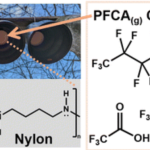
PFAS are synthetic chemicals used in countless consumer and industrial products—from non-stick cookware and fast food packaging to firefighting foam and stain-resistant textiles. Called “forever chemicals,” they resist natural degradation and accumulate in both the environment and human bodies.
Recent studies have linked PFAS exposure to serious health concerns, including:
- Various cancers (kidney, testicular)
- Thyroid dysfunction
- Weakened immune systems
- Reproductive issues
- Liver damage
As PFAS regulations tighten and public awareness grows, accessible, rapid testing methods could prove crucial for protecting communities from these persistent environmental threats.
Research Publication
The study, “Reversible parts-per-trillion-level detection of perfluorooctane sulfonic acid in tap water using field-effect transistor sensors,” was published in Nature Water on September 25, 2025 (DOI: 10.1038/s44221-025-00505-9). First author Yuqin Wang, a graduate student at UChicago, worked alongside Chen, Darling, Professor Andrew Ferguson, and collaborators from both institutions.
Source: University of Chicago and multiple scientific publications