
Los Angeles, CA – January 7, 2026
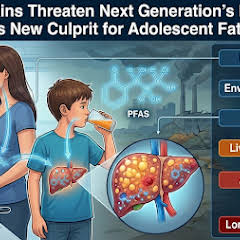
A groundbreaking multi-institutional study published today in Environmental Research has found that exposure to per- and polyfluoroalkyl substances (PFAS)—a class of persistent synthetic chemicals—may significantly increase the risk of metabolic dysfunction-associated steatotic liver disease (MASLD) in adolescents and young adults.
The research, led by scientists at the University of Southern California’s Keck School of Medicine, is among the first to use magnetic resonance imaging (MRI) and gold-standard biomarkers to assess liver fat in youth, offering the strongest evidence to date that PFAS may act as environmental drivers of liver disease in early life.
Key Findings: PFAS Exposure Doubles Liver Disease Risk in Teens
The study analyzed data from 284 participants across two high-risk cohorts: SOLAR (Study of Latino Adolescents at Risk) and Meta-AIR (Metabolic and Asthma Incidence Research). Researchers measured eight PFAS compounds in plasma and used MRI to quantify hepatic fat fraction.
- In adolescents, a doubling of PFOA (perfluorooctanoic acid) levels was associated with a 2.69-fold increase in the odds of developing MASLD.
- PFHpA (perfluoroheptanoic acid) also showed a significant association with increased liver fat.
- The risk was amplified with age, suggesting that older adolescents are more vulnerable to PFAS-induced liver damage.
- Genetic susceptibility played a major role: teens with the PNPLA3 GG genotype—a known risk factor for fatty liver disease—were significantly more affected by PFAS exposure.
Dr. Shiwen Li, lead author of the study and Assistant Professor at the University of Hawaiʻi at Mānoa, told reporters:
“This is the first study to show that PFAS may increase the risk of MASLD in adolescents. The interaction with age and genetics suggests that some youth are particularly vulnerable to these ubiquitous chemicals.”
Smoking Amplifies PFAS Toxicity in Young Adults
While the overall association between PFAS and MASLD was less pronounced in young adults, the study uncovered a significant interaction with cigarette smoking. Among smokers, elevated levels of PFDA, PFHpS, and PFNA were linked to higher liver fat accumulation.
“This suggests that smoking may enhance the hepatotoxic effects of PFAS,” said co-author Dr. Lida Chatzi, Professor of Population and Public Health Sciences at USC. “It’s a double hit—environmental chemicals and lifestyle factors working together to damage the liver.”
A Public Health Wake-Up Call
MASLD, formerly known as non-alcoholic fatty liver disease (NAFLD), is the most common chronic liver condition in children and adolescents. It affects up to 41% of children with obesity, and is strongly linked to future risks of type 2 diabetes, cardiovascular disease, and liver cancer.
PFAS, often called “forever chemicals” due to their resistance to degradation, are found in everything from non-stick cookware to waterproof clothing and fast-food wrappers. They are detectable in the blood of over 95% of Americans, and have been linked to immune suppression, thyroid disorders, and cancer.
This new study adds youth liver disease to the growing list of health concerns associated with PFAS exposure.
Regulatory Implications: Time to Act
The findings come at a critical moment. The U.S. Environmental Protection Agency (EPA) is currently reviewing federal PFAS regulations, and several states are considering or implementing bans on PFAS in consumer products.
Dr. Alan Ducatman, a co-author and public health physician at West Virginia University, emphasized:
“We cannot afford to wait. If PFAS are contributing to liver disease in teenagers, this is a preventable public health crisis. Regulatory action must prioritize protecting children, not just adults.”
Study Limitations and Next Steps
While the study provides compelling evidence, researchers caution that the sample size was modest and the analysis cross-sectional. Future work will require larger, longitudinal studies to confirm causality and explore mechanisms.
Still, the authors argue that the data are strong enough to warrant immediate precautionary measures, including:
- Reducing PFAS exposure in food packaging and drinking water;
- Screening high-risk youth for liver disease;
- Incorporating environmental exposure history into pediatric care.
Conclusion: A Silent Threat to a Generation
As PFAS continue to circulate in the environment and human bodies, this study serves as a stark reminder that today’s pollution may become tomorrow’s disease.
“Adolescence is a critical window of development,” said Dr. Chatzi. “If we don’t act now, we may be setting up an entire generation for lifelong health problems.”
For media inquiries or to request an interview with the study authors, please contact:
USC Keck School of Medicine, Department of Population and Public Health Sciences
Email: [email protected]
Citation:
Li, S., et al. (2026). Associations between per- and polyfluoroalkyl substances and metabolic dysfunction-associated steatotic liver disease in adolescents and young adults: modifying roles of age, lifestyle factors, and PNPLA3 genotype. Environmental Research, 288, 123320. https://doi.org/10.1016/j.envres.2025.123320