
Australian researchers test heat-tolerant porous minerals for sustainable PFAS remediation.
Zeolite-based materials are being explored for their ability to bind “forever chemicals” and withstand the high temperatures needed to break them down into harmless byproducts.
Heat-resistant porous minerals might provide a solution for thermally neutralizing obdurate chemical pollutants, while enabling their effective removal from ecosystems.
Scientists at Western Sydney University in Australia are working on reusable adsorption materials capable of converting so-called “forever chemicals”-better known as PFAS-from environmental hazards into benign waste products.
These researchers are working with naturally occurring, microporous aluminosilicate minerals, mainly zeolites, as thermally stable adsorbents for the removal of harmful PFASs from contaminated water systems. The zeolites are surface-modified to increase their affinity for PFAS molecules.
Moving Beyond Persistence
Current approaches to the remediation of environmental PFAS most often utilize either activated carbon or ion exchange resins to filter PFAS from contaminated waters.
“The challenge lies in what follows,” Darestani says. “Once that material becomes saturated with PFAS, how do you manage it?” Cleanup operations like those for PFAS can generate large amounts of hazardous solid waste containing PFAS that continues to pose environmental risks.
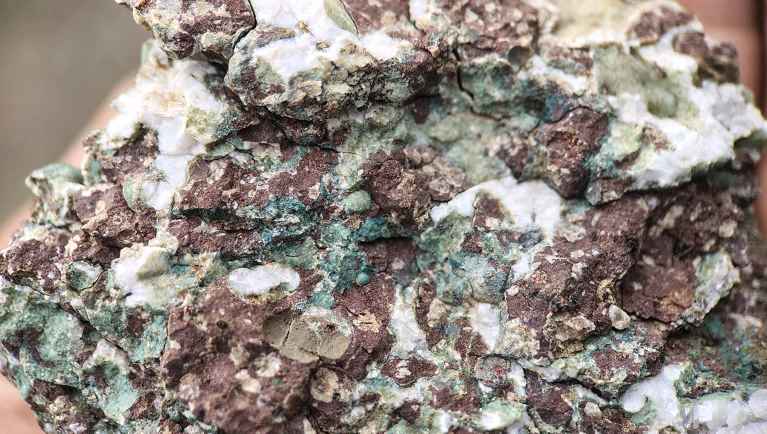
The group has been focusing on zeolites: affordable, naturally porous minerals with a resilient chemical structure not too unlike sand. These materials do not degrade even on repeated heating above 1000°C.
Unlike heat-sensitive activated carbon and resins, PFAS-saturated zeolites can tolerate the temperatures of 300–850°C needed to convert PFAS into harmless salts suitable for safe disposal, Darestani says.
Another key factor under study is developing the adsorption capacity of zeolite materials. Their highly porous architecture endows them with great surface area, but their PFAS adsorption remains rather poor in their unmodified state. “We’re working on chemical surface modifications to zeolites to develop materials that capture PFAS as efficiently as activated carbon,” Darestani explains.
Forming research partnerships comes after the proof-of-concept studies have been conducted, according to Darestani. “We seek collaboration with industry partners to develop practical materials that can comprehensively address this worldwide challenge.”