

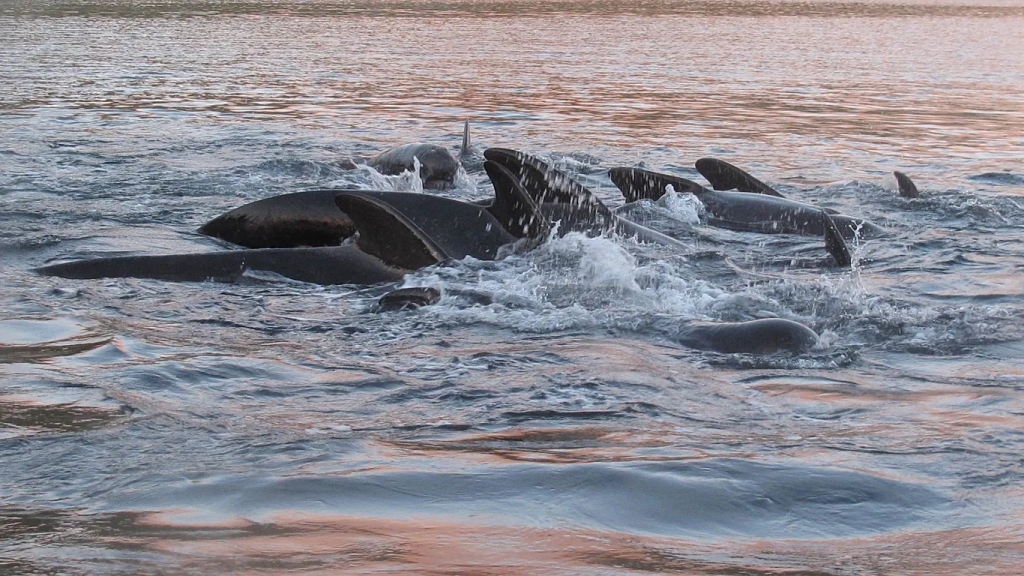
Long-finned pilot whales in the North Atlantic have seen concentrations of forever chemicals drop by more than 60 percent over the past three decades.
Researchers from Harvard analyzed tissue samples from pilot whales between 1986 and 2023 and found that contamination from per- and polyfluoroalkyl substances (PFAS) has declined, despite increasing global production.
The news comes as Europe continues to tighten regulations on these chemical compounds, in light of evidence that chronic exposure has been linked to the development of certain cancers, reduced fertility, and immune system problems.
However, is this really cause for celebration? Or are the new PFAS simply accumulating elsewhere?
What Are Forever Chemicals (PFAS)?
PFAS are a group of over 10,000 synthetic compounds now ubiquitous on Earth. Scientists have found them on the summit of Mount Everest, in human blood, and even in deep-water dolphins off the coast of New Zealand.
They are commonly used to make products resistant to water and grease, such as non-stick cookware and clothing items.
However, they can take more than 1,000 years to degrade naturally, hence the name “forever chemicals.”
Will Pilot Whales Be Free of PFAS?
The study, published in the Proceedings of the National Academy of Sciences, compares the PFAS crisis to a game of “whack-a-mole”: when exposure and effects of one substance are understood, another is developed.
To address the problem, researchers measured total organic fluorine (which includes the fluorine present in most PFAS compounds) instead of measuring individual PFAS. They then used these measurements as an indicator of total PFAS concentrations, including newer types that are much more difficult to identify individually.
The team studied tissue samples from pilot whales, apex predators considered “sentinels of marine pollution.” Their bodies retain chemical exposures for long periods and they live in the open ocean, showing how PFAS can travel through the natural environment.
Overall, organic fluorine levels were mainly due to four ‘legacy’ PFAS, all of which peaked in the mid-2010s and then declined by more than 60 percent by 2023.
“Production phase-outs, initially voluntary and then mandated by regulation, have proven effective in reducing concentrations of these substances in communities near sources and even in the most remote ecosystems, which I believe is very positive and should be emphasized,” says senior author Elsie Sunderland.
Where Are the New PFAS Going?
The researchers note that the reduction in PFAS comes surprisingly while production of new PFAS is increasing, raising a question: if most newer PFAS are not accumulating in the ocean, where are they ending up?
“In general, the ocean is considered the final receptacle for human-generated pollution from land, but we are not observing substantial accumulation of newer PFAS in the open ocean,” adds Sunderland.
“While this is good news for the state of ocean contamination, this suggests that new PFAS may behave differently from legacy ones.”
The study’s findings highlight the need to introduce stricter rules on ongoing PFAS production to mitigate their future impacts.