
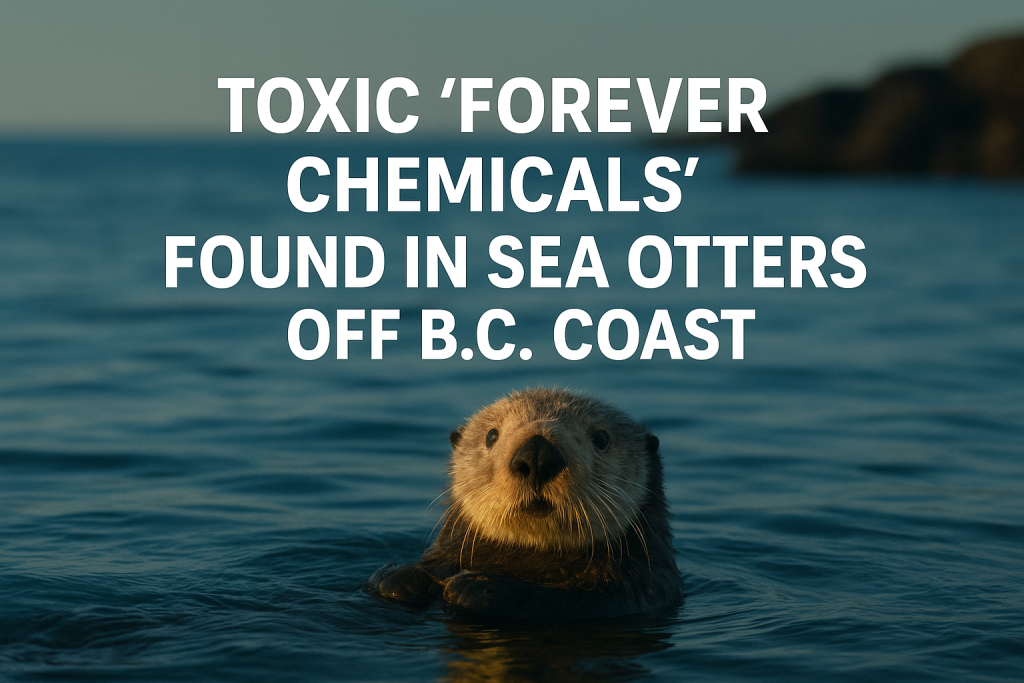

Toxic Forever Chemicals Found in British Columbia Sea Otters, Study Reveals
Urban Otters Show Three Times Higher PFAS Levels Than Remote Populations
Marine Conservation | Vancouver, British Columbia | November 4, 2025
Sea otters thriving along British Columbia’s coastline carry a hidden burden: per- and polyfluoroalkyl substances (PFAS) contaminate every animal tested, with those near urban centers showing three times the contamination levels of their remote counterparts. The findings, published in Environmental Toxicology and Chemistry, raise concerns about the long-term viability of this conservation success story and underscore the pervasive nature of forever chemical pollution in marine ecosystems.
Comprehensive Contamination Discovered
Dr. Dana Price, who leads the Marine Mammal Research Unit at the University of British Columbia, spearheaded research examining tissues from 11 deceased sea otters collected between 2016 and 2021. The results were unequivocal: eight different PFAS compounds were detected in every single animal.
“Where there are a lot of people, it makes a difference,” Price explained. “The sea otters near the southern end of Vancouver Island—a busy area with shipping lanes and urban development—had significantly higher PFAS levels than otters in northern regions.”
The geographic pattern reveals a troubling correlation between human population density and wildlife contamination, suggesting that urban runoff, wastewater discharge, and industrial activity are major sources of PFAS entering coastal marine environments.
The Urban-Rural Divide in Contamination
Sea otters inhabiting waters near metropolitan areas along southern Vancouver Island face substantially greater chemical exposure than their northern counterparts. This three-fold difference in PFAS concentrations highlights how urbanization impacts wildlife even in seemingly pristine coastal habitats.
PFAS—synthetic chemicals used in countless consumer products including non-stick cookware, food packaging, cosmetics, waterproof clothing, and firefighting foam—persist indefinitely in the environment. Their nickname, “forever chemicals,” reflects their extreme resistance to natural degradation processes.
Maternal Transfer: Contamination Before Birth
Perhaps the study’s most disturbing finding involved a newborn sea otter pup that died shortly after birth. The infant carried significant PFAS levels, providing clear evidence of maternal transfer during pregnancy or through the placenta.
“It was shocking that a newborn otter was exposed to PFAS from its mother,” Price said, her surprise evident. The finding demonstrates that contamination begins at the earliest stages of life, potentially affecting development and survival before animals even interact directly with their environment.
The research also revealed that PFAS concentrations were higher in liver tissue compared to muscle, indicating that these organs serve as storage sites for the chemicals—a pattern consistent with PFAS accumulation in other mammal species, including humans.
A Conservation Success Story at Risk
The British Columbia sea otter population represents one of conservation biology’s remarkable achievements. Hunted to local extinction during the fur trade era, the species was reintroduced through a carefully managed program that brought 89 otters from Alaska between 1969 and 1972.
That small founding population has flourished, expanding to over 8,000 individuals by 2017—a testament to the resilience of the species when given protection and suitable habitat.
However, this success story now faces a new, insidious threat. Previous research on California sea otter populations has established troubling connections between elevated PFAS levels and increased mortality from infectious diseases, suggesting that forever chemicals may compromise immune function and overall health.
Sea Otters as Sentinels of Ocean Health
Sea otters serve as excellent indicators of coastal ecosystem health for several reasons that make them uniquely valuable for monitoring pollution:
High Metabolic Rate: Otters consume approximately 25% of their body weight in seafood daily, concentrating contaminants from their prey
Coastal Specialists: They feed exclusively in nearshore environments where human impacts are most pronounced
Limited Range: Individual otters maintain relatively small home ranges, providing location-specific contamination data
Shared Food Sources: Otters eat the same shellfish, crabs, sea urchins, and fish that humans harvest for consumption
This last point carries particular significance for public health. The PFAS contaminating sea otters is also present in the seafood that coastal communities depend upon for nutrition and economic livelihood.
Multiple Threats Converge
Price emphasized that PFAS represents just one threat among many facing British Columbia’s sea otter population. Her research program also investigates:
- Oil spill contamination and exposure risks
- Impacts from wildfires and smoke inhalation
- Plastic pollution and microplastic ingestion
- Climate change effects on prey availability
- Vessel strike mortality in busy shipping lanes
“These forever chemicals are just one of many things that could hurt sea otters,” Price noted, highlighting the cumulative nature of environmental stressors facing marine wildlife.
Regulatory Response: Too Little, Too Late?
In March 2025, the Canadian government announced its intention to designate PFAS as toxic under federal environmental law, recognizing threats to both human health and ecosystems. This regulatory classification would enable stronger controls on manufacturing, use, and disposal of these chemicals.
However, the persistent nature of PFAS means that decades of past use have already created a contamination legacy that will endure for generations. Even with immediate and complete cessation of PFAS production and use, the chemicals already distributed throughout the environment will continue cycling through ecosystems indefinitely.
“Because these chemicals stick around, the PFAS already out there will be a worry for a long time,” Price acknowledged, referring to the intergenerational nature of the contamination problem.
A Sobering Reality
The universal contamination documented in this study—100% of tested otters carrying multiple PFAS compounds—illustrates how thoroughly these synthetic chemicals have infiltrated even remote marine environments.
“It’s sad that every sea otter has PFAS in them,” Price reflected. “There’s a price the environment has to pay.”
That price extends beyond individual animals to populations, ecosystems, and ultimately to human communities that depend on healthy oceans. As top predators in kelp forest ecosystems, sea otters play crucial roles in maintaining ecological balance. Their health directly influences the productivity and diversity of coastal habitats worth billions of dollars to British Columbia’s economy.
The Path Forward
While the findings paint a troubling picture, they also provide essential baseline data for tracking contamination trends over time. As regulations tighten and PFAS use declines, future monitoring can assess whether wildlife exposure decreases correspondingly.
The research underscores the need for:
- Comprehensive PFAS regulations addressing the entire chemical class, not individual compounds
- Investment in wastewater treatment technologies capable of removing PFAS
- Monitoring programs tracking contamination in seafood and wildlife
- Research into PFAS health effects on marine mammals
- Public education about forever chemical sources and risks
An Environmental Debt Coming Due
The sea otters of British Columbia carry more than just thick fur and voracious appetites—they carry the accumulated chemical legacy of decades of human industrial activity. Their contamination serves as both warning and reminder: the synthetic chemicals we create for convenience today become environmental debts that wildlife and future generations must pay tomorrow.
As Price poignantly observed, every sea otter swimming in British Columbia’s coastal waters now carries forever chemicals in its body—a sobering testament to how thoroughly human chemistry has permeated the natural world, even in places that appear wild and pristine.
Source Information:
This article is based on the peer-reviewed study: “Concentrations of Per- and Polyfluoroalkyl Substances in Canadian Sea Otters (Enhydra lutris) are Higher Near Urban Centers,” published November 4, 2025, in Environmental Toxicology and Chemistry. DOI: 10.1093/etojnl/vgaf226