
Key Findings
The European Chemicals Agency has been relying on a consulting firm which also works for PFAS manufacturer lobbies, raising serious concerns about conflicts of interest in EU chemical regulation.
The Conflict of Interest
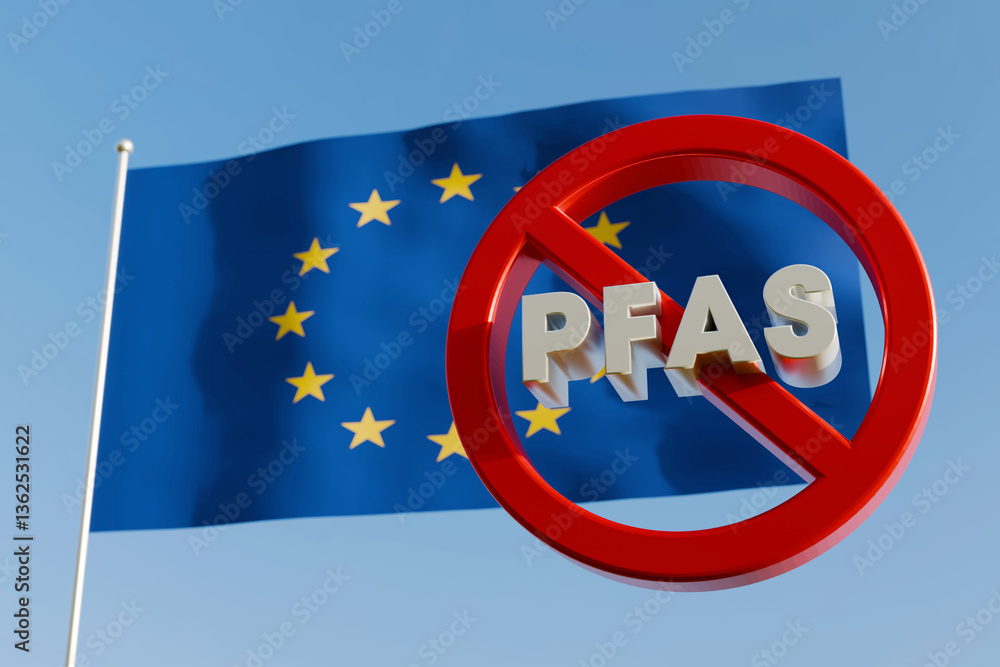
European advisors on PFAS hazards work for the lobbies of the PFAS manufacturers. ECHA is revising the REACH regulation, which by the end of Q4 2025 should largely ban per- and polyfluoroalkyl substances commonly called “forever chemicals” due to their persistence in the environment and human body and posing serious health hazards.
To develop the proposal, ECHA called on consulting firm Ramboll for help. However, Ramboll has also worked for lobbies representing major European PFAS producers.
The Discovery
The issue came to light in late summer when, in a surprise update, ECHA published that some PFAS could remain in use “under strict conditions” despite growing scientific evidence of their dangers.
The NGO Aria examined ECHA’s registers and documents and found that Ramboll was the consulting company. The Danish company, which won a contract with the EU in 2020, worked on an ECHA-Commission report which recommended a 10-year transition period to phase out PFAS from firefighting foams — a timeframe enshrined in the final EU law.
Ramboll’s Dual Clients
Between 2022 and 2023, Ramboll worked for:
- Gujarat Fluorochemicals (Indian PFAS manufacturer)
- Honeywell and 3M, the US chemical giants
- Plastics Europe, one of the most active lobbying groups at the European level
Public Letter and Response
An open letter to ECHA, signed by various European organizations including Transparency International, calls this a conflict of interest. The letter states that Ramboll “may have exercised undue influence over the draft regulation” because of its links with the PFAS industry.
The European Commission responded to the Financial Times, saying it keeps “transparency, integrity and impartiality in all our engagements with external consultants and contractors.”
Ramboll said the activists’ letter “does not accurately reflect” its work on PFAS for various clients and maintained that it avoids conflicts of interest through robust procedures for ensuring conclusions are based on objective assessment of scientific evidence.
The TFA Controversy
In 2023, Ramboll produced a report for Honeywell that openly contradicts the conclusions of the ECHA on trifluoroacetic acid, one of the PFAS molecules linked to liver disease and reduced fertility.
According to Hans Peter Arp, a professor of environmental chemistry at the Norwegian University of Science and Technology, Ramboll’s analysis underestimated the levels of TFA emission by at least five times, using models that did not consider direct discharge from factories into waterways. “It’s not a convincing study and certainly wouldn’t have passed a peer review process for scientific publication,” Arp said.
New Contracts Despite Concerns
Despite these issues, Ramboll was awarded a new contract just a year ago, valid for up to six years with a maximum budget of one million euros, possibly involving the firm in developing the next water directive.
The problem, according to the Financial Times, is partly rooted in the Commission and various agencies struggling with a high workload deriving from the EU green agenda. Over a billion euros were invested in 2023 alone to fund impact assessments, feasibility studies, and policy evaluations.
EU Court of Auditors Warning
The European Court of Auditors already warned in 2022 of an overdependence on external consultants, with the potential for conflicts of interest.
In 2024, ECHA issued a report on PFAS inviting the Commission to reconsider total ban proposals in favor of differentiated restriction options, citing the need to protect “uses and sectors” where a ban could have “disproportionate socio-economic impact”-an argument that apparently falls outside ECHA’s mandate to assess chemical risks, not socio-economic effects.
Political Response
According to Il Salvagente, MEP Cristina Guarda, from the Green-Left Alliance, announced that she had filed an inquiry with the European Commission. “It is unacceptable that those advising European institutions on rules to ban PFAS are the same entities working for those who have every interest in slowing down these rules,” said Guarda. “The Commission and ECHA must immediately clarify all contractual relationships and explain how they intend to ensure scientific assessments are conducted in full independence.”
Guarda continued: “If confirmed, this would be an emblematic case of how lobbies manage to influence public decisions with direct impacts on citizens’ health. I have prepared an urgent inquiry in order to demand total transparency, the application of the precautionary principle and a universal ban on PFAS-from trade to production-which can no longer be postponed. Public health cannot be put at risk for the economic interests of a few chemical multinationals.”
Source: Valori.it
Original Article: L’Europa chiede aiuto alle lobby dei Pfas per scrivere le regole sui Pfas
Date: 2025
This article raises several red flags with regards to regulatory capture within EU chemical policy and the undue influence of industry lobbies on decisions pertaining to public health.