
In a world where environmental disasters seem to be compounding daily, one class of pollutants has stood out for the particular insidiousness of its impact: per- and polyfluoroalkyl substances, known by the acronym PFAS. Dubbed “forever chemicals” for their extreme persistence in the environment, these synthetic compounds have created a toxic legacy that may well burden humanity for generations. Now, a coalition of 115 European civil society organizations has united behind a powerful call to action-the Manifesto for an Urgent End to ‘Forever Chemicals’ PFAS.
What’s so concerning about PFAS?
PFAS are a family of more than 10,000 human-made chemicals introduced in the late 1940s and now ubiquitous in modern life, from non-stick cookware and water-resistant clothing to firefighting foams and food packaging. These chemicals possess a unique molecular structure-a carbon-fluorine bond that makes them extraordinarily useful for industry but catastrophically persistent in nature.
It is the same carbon-fluorine bond, the strongest in organic chemistry, that ensures PFAS virtually never break down. They accumulate in soil, water, air, and living organisms, circulating through ecosystems indefinitely. According to scientists, PFAS contamination has already exceeded the planetary boundary because levels in rainwater and environmental media now exceed guideline values around the world.
A Global Crisis With Local Impacts
The manifesto documents a sobering reality: some 23,000 sites across Europe are contaminated with PFAS, over 2,100 of them “hotspots” with contamination posing hazardous health risks to people living nearby. These are not abstract statistics; they represent real communities with poisoned water, contaminated soil, and in limbo over what their futures hold.
Take, for instance, Belgium, where the contamination zone created by the 3M factory in Zwijndrecht was such that blood tests performed on more than 8,000 residents showed half of them with excess levels of PFAS. Eggs from poultry within a radius of 15 kilometers pose health risks. In France, around Lyon, there is a “Chemicals Valley” where more than 200,000 people drink water with PFAS levels beyond EU regulatory limits. In Italy, up to 350,000 people unknowingly consumed contaminated drinking water for decades because of emissions from a single factory in the Veneto region.
The financial cost will be staggering: independent scientists estimate that cleaning up legacy PFAS contamination across Europe would cost €2 trillion over 20 years—€100 billion annually—without accounting for healthcare costs. This does not take into account the immeasurable cost of damaged ecosystems and compromised human health.
From Womb to World: PFAS in Our Bodies
Perhaps most unnerving, though, is how deeply PFAS have penetrated human biology. The chemicals build up not only in blood and urine but also in the placenta, umbilical cord blood, and even breast milk. Children today are born “pre-polluted,” carrying burdens of PFAS before taking their first breaths. One 2022 study discovered that more than 14% of European teenagers had PFAS levels exceeding health-based guidelines established by the European Food Safety Authority.
Health implications are deepening and getting clearer with every new study that comes up. The International Agency for Research on Cancer has classified PFOA, also known as perfluorooctanoic acid, as carcinogenic to humans, while another chemical, PFOS or perfluorooctanesulfonic acid, is listed as possibly carcinogenic. Other than cancer, exposure to PFAS has been linked to thyroid disease, liver damage, low birth weight, high cholesterol, weakened vaccine response, and developmental issues such as lowered IQ in children.
Pregnant women and developing fetuses are especially at risk. Prenatal PFAS exposure can impact brain development and diminish children’s intelligence; it also has been linked to childhood obesity. As the limits on safety continue to drop dramatically-the EPA reduced its PFOA reference dose by more than 13,000-fold between 2016 and 2021-we’re confronted with just how poorly we have protected public health.
An Ecological Disaster Beyond Human Control
PFAS pollution does not stop with human health: it is increasingly powering biodiversity loss and climate change. These chemicals now permeate ecosystems from mountaintops to polar regions, affecting wildlife throughout the food chain. Marine mammals show impacts on immune, liver, and kidney function. Seabirds exhibit thyroid disruption and poor body condition. Fish show reproductive and developmental problems. Even pollinators like bees suffer increased mortality and colony disruption due to PFAS exposure.
The chemical industry ranks as the largest industrial energy consumer and third-largest subsector for direct carbon dioxide emissions. Some of the most potent greenhouse gases known are PFAS compounds. We face interconnected crises-chemical pollution, biodiversity collapse, and climate change-that require integrated solutions.
The Circular Economy Paradox
The PFAS create a particularly vicious cycle that undermines efforts toward sustainability. These chemicals contaminate recycled materials, spreading through supposedly “circular” product loops. Recycled paper products are contaminated with PFAS as unintentional contaminants. Food packaging that is compostable but treated with PFAS introduces forever chemicals directly into the agricultural soil when composted as intended. In Germany, the fallout of PFAS-contaminated paper sludge, when spread over farmland, led to crops on more than 1,000 hectares exceeding the levels considered safe for consumption.
Worse still, we lack effective disposal methods. Even high-temperature incineration does not guarantee complete breakdown of PFAS; it instead produces toxic combustion byproducts and leaves contaminated ash residues. The continued manufacture and use of PFAS in the absence of effective means of disposal constitutes a fundamentally unsustainable trajectory.
Alternatives exist—regulation drives innovation.
Industry repeatedly argues that PFAS are necessary and cannot be replaced. The manifesto systematically dissects this myth as well. When Denmark banned the use of PFAS in food packaging in 2020, identical McDonald’s french fry bags sold in Denmark contained no PFAS treatment, while the same product in neighboring countries still did-revealing that alternatives always existed. France’s ban on PFAS in cosmetics shows that companies are able to formulate their products without these chemicals; the French government cites that domestic manufacturers “ahead of the game” on PFAS-free cosmetics enjoy a “competitive edge.”
Over 120 companies have joined ChemSec’s Corporate PFAS Movement, in support of a ban, and many of them have already phased out PFAS in operations. Even for “clean transition” products-heat pumps and electric vehicles-alternatives to fluorinated gases exist or are in development. The claim that PFAS are essential often reflects industry’s reluctance to innovate rather than genuine technical necessity.
History shows us that regulation fuels innovation. Denmark will ban PFAS in apparel, footwear, and furniture by July 2026 and is actively supporting alternatives development. France has committed to banning PFAS in apparel and footwear. These national actions prove that when regulations create clear timelines, industry responds with solutions.
The Universal Restriction: A Regulatory Solution
The manifesto focuses on one policy solution: the universal PFAS restriction, or uPFAS, proposed by Denmark, Germany, the Netherlands, Norway, and Sweden, and published by the European Chemicals Agency in 2023. It will comprehensively address PFAS as one chemical class without the impossible task of regulating thousands of individual compounds one by one.
We have seen spectacular failure of the piecemeal “chemical-by-chemical” approach, resulting in endless cycles of regrettable substitution. When one PFAS is restricted, industry simply switches to another, similarly problematic PFAS that happens to be unregulated. This pattern has undermined decades of regulatory effort while contamination continues unabated.
The universal restriction would cover all PFAS, including fluoropolymers, in production and use across industries. Reasonable derogations for so-called “essential uses” protecting health, safety, and the proper functioning of society where alternatives genuinely do not yet exist, would be limited in time only. Such derogations would need to be subject to very strict risk management, including labeling, monitoring, and reporting to ensure zero environmental emissions throughout product life cycles.
Importantly, the restriction has to be adopted by the end of 2030—within the mandate of the current European Commission ending in 2029—to meet the commitments of the EU’s Chemicals Strategy for Sustainability under the European Green Deal.
Eight Powerful Calls to Action
This manifesto puts forward eight evidence-based arguments for immediate action:
- Irreversible Global Contamination: PFAS now appear in rainwater, water bodies, soils, wildlife, and humans worldwide. Current monitoring captures only a fraction of the problem.
- Hotspot Communities Under Siege: Thousands of European sites are facing dangerous levels of contamination, affecting the drinking water and local environments of millions of residents.
- Bioaccumulation in Humans: Humans bioaccumulate PFAS in their bodies through food, water, and consumer products. Children are born pre-contaminated and are exposed throughout their lives.
- Serious Health Threats: The evidence linking PFAS to cancer, organ damage, developmental problems, and scores of other health issues is crystal clear, with safety limits repeatedly lowered as research improves.
- Biodiversity and Climate Crisis: Chemical pollution is a main driver of species loss, while PFAS production contributes considerably to greenhouse gas emissions.
- Drinking Water Contamination: Highly mobile PFAS can easily migrate to water supplies, and some, like TFA, cannot be removed with conventional filtration methods.
- Barrier to Circular Economy: PFAS contaminates recycled materials and produces hazardous waste streams with no viable disposal solutions.
- Unnecessary Use with Available Alternatives: Many PFAS applications are non-essential, and alternatives are readily available once regulations create market demand.
The Call to Action
The manifesto makes clear, specific demands:
To the EU Commission: Adopt the universal PFAS restriction by 2030 without weakening amendments or new exemptions. Cover all PFAS including fluoropolymers. Allow derogations only for genuine essential uses with time limits and regular review. Strengthen the legislation concerning pesticides, biocides, and pharmaceuticals in order to address the PFAS sources that are outside the REACH regulation.
To EU Member States: Fully support the universal restriction while introducing earlier national bans on products like clothing, cookware, and cosmetics where alternatives already exist. Develop efficient decontamination plans for affected communities with polluter-pays principles ensuring producers bear costs, not taxpayers.
To International Forums: Work towards class-based listing of all PFAS under the Stockholm Convention on Persistent Organic Pollutants for global elimination.
Companies, commit now to phase out PFAS without waiting for regulations and join the corporate “No to PFAS” movement.
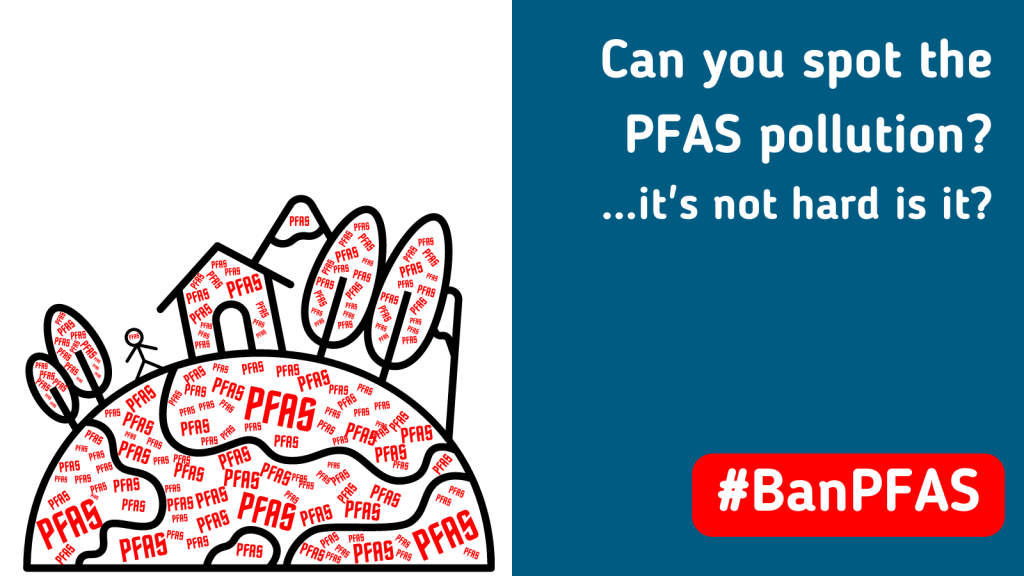
To all Citizens: Demand PFAS-free products, and amplify campaigns using hashtags #StopPFAS and #BanPFAS on social media.
Why Group Regulation Matters
The manifesto highlights that all PFAS must be restricted as one group-no exceptions. This principle is based on overwhelming logic:
All PFAS are highly persistent or degrade into persistent PFAS, ensuring that humanity’s chemical footprint on the environment is permanent. With thousands of PFAS identified but toxicological data available for only a handful, waiting for several decades to complete risk assessment for each compound while contamination accelerates is unacceptable.
Even fluoropolymers, which industry argues should be exempt due to lower acute toxicity, create problems throughout their lifecycle. Other PFAS are used as processing aids during fluoropolymer production or appear as impurities. Fluoropolymer disposal contaminates landfill leachate or releases harmful byproducts during incineration. From a lifecycle perspective, fluoropolymers are inseparable from broader PFAS problems.
The Time for Half-Measures Has Passed
Access to clean, healthy, and sustainable environments is a recognized human right; states have primary duties to protect citizens from exposures to pollution through prevention. Chemical pollution has already exceeded safe limits for humanity. Every day of regulatory delay means more irreversible accumulation of PFAS in the environment, more health damage, and greater impact on biodiversity.
The PFAS crisis demands emergency-level response. The European Union has the opportunity to lead global innovation toward a 21st-century economy that does not depend on harmful pollution at public health’s expense. The universal PFAS restriction presents tested and available regulatory technology that is ready for implementation.
As the manifesto concludes: “The PFAS pollution crisis must be treated as an emergency situation. This leaves no room for half-hearted measures.”
A Movement Gaining Momentum
The manifesto represents the consensus of 115 civil society organizations across the health, environmental, consumer protection, and sustainability sectors. Established under the initiative of leading environmental health organizations, it has attracted signatories ranging from national environmental groups to international advocacy networks.
This coalition rejects vested industry interests that lobby for regulatory weakening and exemptions. They demand that decision-makers base their decisions on scientific evidence, putting citizens and ecosystems above corporate profits. This movement also understands that a transition to a clean, resilient economy has to be devoid of dependence on chemicals that sully health and the natural systems supporting life.
Looking Ahead
The stakes can’t be much higher. PFAS contamination is among the more serious environmental health challenges ever faced by humankind because it is irreversible. While many pollutants degrade over time, PFAS will persist essentially forever once released. If we do not act strongly now, we are creating a toxic legacy that will burden countless future generations.
The path forward could not be clearer: comprehensive class-based restriction of PFAS through universal restriction, strengthened enforcement, polluter-pays remediation, safer alternatives development, and transparent public information. The regulatory tools exist. The alternatives are available or achievable. The scientific evidence is overwhelming.
What remains is political will—the courage to prioritize long-term public health and environmental protection over short-term industrial convenience. The manifesto provides a roadmap. The question is whether policymakers will seize this moment to protect current and future generations from forever chemicals.
The 115 organizations behind this manifesto represent millions of European citizens who refuse to accept that their children must grow up in a world poisoned by persistent chemicals. They are demanding action, and they are demanding it now.
The full manifesto, with extensive scientific references, detailed case studies, and complete signatory list, is available at: https://www.banpfasmanifesto.org/en/