December 9, 2025
Forever chemicals, known as PFAS, don’t just contaminate water and soil—they also pollute the air we breathe. A new report from Greenpeace Italy reveals disturbing new details: Piedmont is the epicenter of fluorinated gas pollution in the country, with 76% of national emissions concentrated in this region. And who bears the greatest responsibility?
Piedmont Leads in Fluorinated Gas Emissions
Research by Greenpeace Italy’s Investigation Unit, previewed in La Prensa, analyzed data from the European Pollutant Release and Transfer Register (PRTR), highlighting a concerning situation. Between 2007 and 2023, out of a total of 3,766 tons of fluorinated gases emitted in Italy, 2,863 tons—equivalent to 76% of the national total—came from Piedmont.
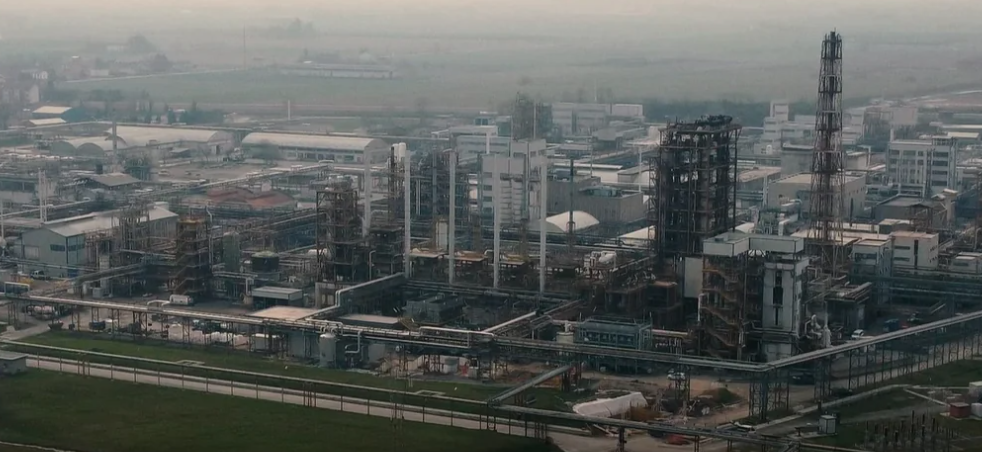
The vast majority of these emissions, approximately 2,828 tons, are concentrated in the municipality of Alessandria, in the village of Spinetta Marengo. The reason? This is the headquarters of Syensqo, formerly Solvay, the only Italian chemical company still producing PFAS. Over sixteen years alone, this company has generated more than half of Italy’s pollution related to fluorinated gases. In 2023 alone, the plant was responsible for 55% of the country’s fluorinated gas emissions.
The Link Between Fluorinated Gases and PFAS
But why worry about fluorinated gases? Fluorinated gases, widely used in refrigeration and industrial processes, are closely linked to PFAS: many of them can degrade or transform into PFAS in the environment—the infamous “forever” persistent substances. PFAS exposure is associated with severe health effects, including certain types of cancer, immune system problems, and thyroid issues.
Some fluorinated gases, once released into the atmosphere, can transform into trifluoroacetic acid (TFA), a type of PFAS widespread globally. This compound accumulates in streams and drinking water because it doesn’t break down, making it a persistent source of contamination. Precipitation carries it into the surrounding environment, contributing to soil and water pollution.
Recently, the German Environmental Agency asked the European Chemicals Agency to classify TFA as toxic to reproduction, highlighting the urgency of monitoring and reducing the use of these PFAS precursors.
A Decades-Long History of Contamination
The story of Solvay, now Syensqo, in Spinetta Marengo is not new. For years, the company has been at the center of controversy over PFAS contamination that has polluted the area’s soil and water. This is why the Stop Solvay Committee was born—a local group fighting to protect health and the environment in the Alessandria area.
A small victory recently came thanks to Circolo Legambiente Ovadese Valli Stura and Orba, when the Piedmont Regional Administrative Court ruled in their favor: the Province and Syensqo must submit documentation on emissions that had previously been denied to them based on industrial secrecy justifications.
Alternatives to PFAS
The data shows a progressive decrease in emissions starting from 2019-2020, partly due to the pandemic and consequent shutdowns. In 2022, former Solvay announced the gradual elimination of PFAS fluorosurfactants by 2026, aiming for a new generation fluorinated surfactant, C6O4, defined by the company as “non-bioaccumulative.”
But is this alternative truly safe? According to Democratic Medicine, C6O4 has the same acute toxicity as the PFAS it should replace, though adequate studies on long-term toxicity are lacking. Research from the University of Padua and the CNR Water Research Institute has highlighted negative impacts on biological systems.
The situation became so critical that between June and July 2024, the Province of Alessandria had to order the suspension of C6O4 production for one month due to excessive contamination levels detected in surrounding waters and soil.
Fluorinated gases pose not only a health risk but also a serious climate threat. They are greenhouse gases with global warming potential thousands of times greater than CO2. HCFC-22, for example, has a global warming impact 5,280 times greater than carbon dioxide.
In Italy, there is still no law prohibiting the production and use of PFAS. While progress has been made on drinking water limits, a national regulation establishing a limit for fluorinated gas emissions is lacking. The only regulations in force are those of the European Regulation on fluorinated gases, updated in 2024, which provides for the progressive reduction of these substances’ use by 2030, leaving member states responsible for organizing controls and defining sanctions.
According to Greenpeace Italy, several safe and non-hazardous alternatives already exist to replace fluorinated gases in industrial processes, as also highlighted by an ISPRA study. It is therefore urgent that Italy adopt adequate legislation to protect citizens’ health and the environment from these pollutants.