Belgian independent researcher Thomas Goorden’s explosive 90-page investigation, The Dark PFAS Hypothesis, reveals an alleged three-decade effort by the world’s six largest fluorochemical producers—3M, DuPont/Chemours, Solvay, Honeywell, Arkema, and Daikin—to execute a concerted campaign of “science bending.” The goal? To obscure both the anthropogenic origin and the toxicity of ultra-short-chain per- and polyfluoroalkyl substances (PFAS), particularly trifluoroacetic acid (TFA).
This is not a new storyline. It marks the third major scientific deception scandal emanating from the halogenation industry, following the catastrophic ozone hole controversy and the C8/PFOA litigation, famously known as the “Dark Waters” case. The pattern is clear and the playbook, chillingly consistent.
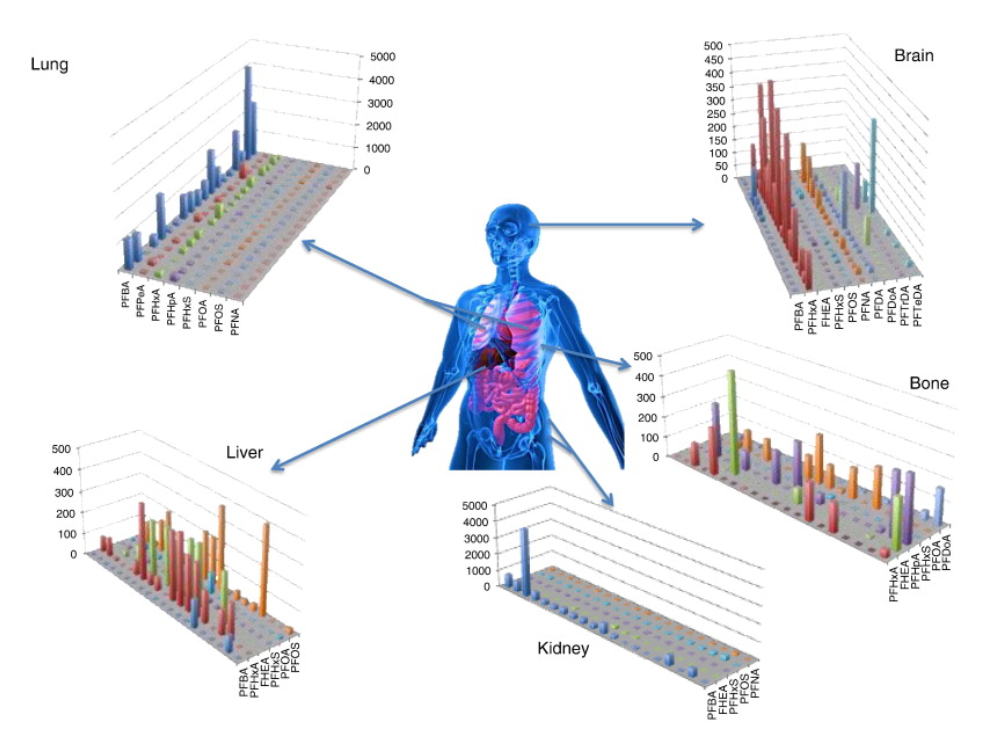
20 residents of Tarragona (Catalonia, Spain)
I. History Repeats: The Halogenation Industry’s Playbook
The history of fluorochemical manufacturing is riddled with instances of denial, delay, and the strategic funding of “alternative research.”
1. The Ozone Hole (1974-1987)
When Rowland and Molina first linked chlorofluorocarbons (CFCs) to ozone destruction, manufacturers immediately deployed a strategy of denial and delay. They blamed natural sources like solar cycles and volcanic activity. This tactic successfully stalled meaningful regulation for 12 years until the 1987 Montreal Protocol finally banned CFCs globally.
2. The “Dark Waters” Deception (1998-2015)
The industry maintained a decades-long suppression campaign regarding the toxic nature of PFOA/PFOS (C8 chemicals). Internal documents confirmed DuPont funded studies to exonerate the chemicals and actively used legal strategies to establish “Daubert precedent,” thereby excluding damaging expert testimony. The notorious 2001 Weinberg Memo explicitly stated the goal: to “shape the debate at all levels.”
3. The “Natural TFA” Myth (1987-Present)
Following the Montreal Protocol, the industry pivoted. To justify the commercial viability of HFC/HFO refrigerants, they created the AFEAS/PAFT consortium. This consortium funded over 80% of the literature now cited to claim that the atmospheric breakdown product—TFA—is “natural,” “non-bioaccumulative,” and “non-toxic.”
The industry’s narrative is now fundamentally challenged.
II. Manufacturing the “Natural TFA” Narrative
The industry built its narrative by actively undermining real-world data and promoting a false baseline.
- Failed Predictions: AFEAS-funded workshops in the 1990s predicted ng/L levels of TFA in rainwater. Actual measurements across Europe ranged from 25–280 ng/L.
- Attribution Shifting: Faced with contradictory data, the industry defaulted to the claim of a necessary “volcanic or geological source.”
- Ocean Data Manipulation: They employed a constant 200 ng/L background value to calculate a “natural” ocean TFA inventory of 268 million tonnes. By ignoring µg/L levels in coastal measurements, they made anthropogenic emissions appear trivially small.
The Ice Core Study That Exposed the Lie
The definitive rebuttal came in 2020. The Pickard et al. ice core study completely demolished the “natural source” theory. Arctic ice cores revealed that the deposition of TFA, PFPrA, and PFBA rose sharply only after 1990, coinciding precisely with the introduction of HFCs/HFOs. These substances were virtually absent before the Montreal Protocol.
III. Non-Specific Chemistry: Hidden Emission Sources
The industrial processes themselves are the engine of ultra-short-chain PFAS generation, a fact the industry systematically underreports.
3M’s Electrochemical Fluorination (ECF) Process
The ECF process is inherently inefficient and non-specific:
- Only 35-40% of the feedstock is converted to the target C8 sulfonyl fluoride.
- A massive 60-65% forms shorter, longer, branched, or cyclic PFAS by-products.
Internal 3M data, only released in 2022, showed process water containing up to 6.8 mg/L PFPrA (C3) and 78 µg/L TFA (C2). Rainwater effluent averaged 22 µg/L TFA.
The PFAS “Chemical Soup” Signature
Similarly, Fluorotelomerization is not a deterministic reaction, creating numerous chain length homologues and isomers. Whether it’s the Cape Fear River downstream of Chemours’ GenX plant or Solvay’s chloro-polyether cluster, all these sites display a similar signature of “PFAS soup”—a complex, non-specific mixture of fluorinated compounds.
IV. Weaponizing Analytical Gaps
A key tactic has been to actively restrict the ability of regulators and the public to detect the full scope of contamination.
Official Method Blind Spots
Certified analytical methods in most jurisdictions start at C4, leaving C1-C3 carboxylates and sulfonates effectively unregulated. Because official standards for these ultra-short molecules are missing, facilities can report “<LOQ” (below limit of quantification) or simply omit them entirely.
The Disappearance of Total Fluorine Accounting
The most critical manipulation involves the replacement of comprehensive analytical techniques:
- 2000-2020: 3M used “Soluble Organic Fluoride” (SOF, 1000°C combustion), finding up to 36% “unknown” fluorine.
- 2020: When permits were updated, SOF was deleted and replaced by “Adsorbable Organic Fluoride” (AOF, 950°C after charcoal).
- The Outcome: AOF recovers only 10% of TFA and 50% of PFPrA. This instantly reduces the legally reported total by a factor of 1.4–5×. The true contamination level is masked by the reporting method itself.
Setting Non-Protective Limits
Drinking water reporting limits were set at 10 ng/L, which is well above the 4.4 ng/L health reference value derived by EFSA in 2020. This ensures that exceedances of the health standard cannot be detected by official laboratories, legally guaranteeing “compliance.”
V. Short-Changed Toxicology: The Safety Fallacy
The industry-funded dogma that ultra-short PFAS are safe because they are “non-bioaccumulative” is a dangerous fallacy.
- Real-World Bioaccumulation: Spanish autopsy data shows PFBA (C4) concentrations in human lung and kidney exceed those of PFOA.
- Inverse Chain Length Toxicity: Studies on freshwater invertebrates show an inverse chain length toxicity: TFA > PFPrA > PFBA.
- Bioavailability: All short-chain molecules satisfy Lipinski’s “Rule of Five,” meaning they have high oral bioavailability and should be classified as Cramer Class III (“highest priority for investigation”).
The provisional TFA tolerable daily intake derived by one German agency was 2,000 times higher than the EFSA group reference. Why? It relied on sparse rat data alone and ignored critical immunotoxic outcomes seen in epidemiological studies.
VI. Regulatory Capture and Its Cost
The scale of lobbying expenditure highlights the industry’s commitment to self-preservation:
- Lobbying Power: The six fluorochemical firms spend an estimated €12–25 million per year on lobbying in the EU alone.
- The Role of ToxStrategies: This consultancy, previously implicated in delaying regulation of Chromium(VI), is now actively generating reports for giants like Chemours. Their objective is to keep ultra-short PFAS outside of group limits and force the compound-by-compound assessments that industry can delay indefinitely. This is a deliberate strategy of creating regulatory paralysis.
VII. The Dark PFAS Hypothesis: A Summary
The evidence strongly supports the central thesis:
“Large multinational chemical companies have conducted a coordinated campaign of deliberate science bending and regulatory capture to safeguard their fluorination business. To justify HFC/HFO replacements for CFCs, they obscured the anthropogenic source and toxicological relevance of environmental TFA and other ultra-short PFAS. Products introduced under the PFOA Stewardship Program were designed to evade detection by targeting molecules that degrade primarily to ultra-short PFAS. Access to appropriate analytical techniques, reference standards, and critical process information—essential for understanding the full environmental impact of PFAS—has been and continues to be actively withheld.”
VIII. The Way Forward: Six Critical Recommendations
To break the cycle of “industry self-testing – regulatory acceptance,” Thomas Goorden proposes six critical steps for regulatory bodies:
- Mandatory Monitoring: Include C1-C3 and poly-ether PFAS in national monitoring lists and create open standard libraries.
- Restore True Accounting: Restore high-temperature combustion TOF methods ($\ge 1,400^\circ\text{C}$) for true total-fluorine accounting.
- Apply Group Limits: Apply mixture Reference Point Factor (RPF) schemes to foreseeable “congener clusters” instead of forcing indefinite individual assessments.
- Enforce Transparency: Require full disclosure of by-products, yields, and degradation pathways. Ban claims of confidentiality for environmentally relevant information.
- Re-evaluate Safety: Re-evaluate existing “safe” exposure levels using independent, immunotoxicity-based studies.
- Global Action: Add TFA, PFPrA, TFMS, and related degradation products to the Montreal Protocol and Stockholm Convention annexes for global tracking and eventual phase-out.
Concluding Thoughts
The Dark PFAS Hypothesis is more than an indictment of the fluorochemical industry; it is a stark warning about the integrity of our entire scientific and regulatory system. When profit is pitted against public health, and “science” can be bought and manipulated, the problem of “forever chemicals” becomes deeper, broader, and darker than we ever imagined. The unquantified but potentially massive costs to public health and water utilities must now be fully addressed.
Reference:Goorden, T. (2023). The Dark PFAS Hypothesis : Strategies of deception. Full PDF