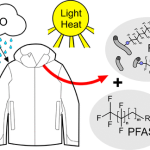
If you Google “PFAS,” you quickly encounter two startling truths: they are astoundingly useful—keeping our phones, fries, fire-trucks, and even space suits working—yet they may also be the most stubborn chemicals ever mass-produced, now detected in polar bears, raindrops, and 97% of human blood samples.
So, what do we do about these “forever chemicals”?
A mega-paper authored by 40 experts provides a comprehensive GPS for navigating the challenge. The journey is split into three essential, interconnected pillars that must run in parallel: Monitor & Understand, Regulate & Replace, and Capture & Destroy.
Pillar 1: Monitor & Understand 🔬
We can’t manage what we can’t measure.
Analytics
While targeted analytics remain the compliance gold standard, they only see a tiny fraction of the 10,000+ PFAS universe. Labs are moving toward a robust “three-legged stool” approach:
- Target List: For mandated compliance.
- Non-target High-Resolution Mass Spectrometry (HRMS): For discovering new or unknown contaminants.
- Total Organic Fluorine (TOF): To achieve a complete mass balance and ensure no fluorine-containing compounds are missed.
Monitoring
When it comes to monitoring, while drinking water data is plentiful, information on air, dust, food, and indoor air is scarce. A promising fix involves pairing low-volume environmental monitoring kits (EOF) with wearable samplers (like wrist-worn silicone bands) to enable citizens to crowd-source critical exposure clues.
Fate & Transport
Understanding fate and transport is also evolving. Classic models fail because PFAS love interfaces (like air-water or soil-to-plant boundaries) more than bulk phases. New datasets are being built, combining quantum chemistry and AI, to finally predict a molecule’s true destination.
Pillar 2: Regulate & Replace ⚖️
Regulation
Current regulation values vary widely, from 4 ng L⁻¹ in the U.S. for specific compounds to a sum limit of 500 ng L⁻¹ in the EU for a group of 20 PFAS. Experts urge a two-tier system:
- Group limits based on total organic fluorine
- Compound-specific limits only for the few proven high-toxicity actors
Replacement
On the replacement front, databases list hundreds of alternatives, but only a small fraction of applications can switch today without performance loss. The short-term solution is to use “essential-use” clauses (borrowed from the Montreal Protocol) to phase out non-critical uses. The long-term lever is to mandate open performance data so AI can design high-performing, fluorine-free drop-in chemistries much faster.
Pillar 3: Capture & Destroy 🔥
This pillar focuses on getting PFAS out of the environment and permanently breaking them down.
Capture & Enrichment
Adsorption
Granular Activated Carbon (GAC) and anion-exchange resins are the workhorses. However, short-chain PFAS break through much faster. Next-generation carbons are being manufactured with precise 2–10 nm mesopores and tuned with surface-cations (like Fe/Al oxides) to effectively grab both long and short chains.
Enrichment
- High-pressure membranes (Reverse Osmosis/Nanofiltration) can reduce volume by 3–10×
- Foam fractionation is highly effective, reaching >50× concentration, especially when aided by cationic co-surfactants for short chains
- Hybrid systems, like a GAC → weak-anion-exchange “hybrid train,” are moving to pilot scale, using carbon for long chains and regenerable resin for short chains
Destruction
The goal is to break the incredibly strong Carbon-Fluorine (C–F) bond.
Thermal Destruction
Incineration can achieve high destruction efficiency (99.99% DRE) if 1100 °C and a 2–4 second residence time are guaranteed. Poor mixing, however, can result in the harmful emission of CF₄. Real-time monitoring like FTIR is key to closing the fluorine mass balance.
Pyrolysis (600–700 °C under N₂) destroys >90% of PFAS while yielding biochar that can be reused as a sorbent, potentially cutting life-cycle CO₂ by half compared to incineration.
Advanced Water-Based Methods
Super-critical Water Oxidation (SCWO): Turns PFAS into CO₂ + HF in seconds at 374 °C/22 MPa. The main challenge is salt precipitation and corrosion, which new ceramic liners are designed to address.
Hydrothermal Alkaline Treatment (HALT): Works at a lower temperature (200–350 °C) using a high concentration of NaOH. The hydroxide ion (OH⁻) cleaves the C–F bond. It has a significantly lower energy demand (5–10× less than SCWO) and traps fluoride as CaF₂.
Mechanical & Electrical
Ball Milling: The “dark horse.” It is solvent-free and can mineralize PFAS in soil or fire-fighting foam (AFFF) at ambient conditions in hours. The focus is now on engineering continuous feed and dust control.
Electrochemical Oxidation: Uses advanced anodes (like Boron-Doped Diamond, BDD) and offers competitive energy use (4–30 kWh m⁻³). 3D-printed porous electrodes are now scaling to 1 m³ h⁻¹ mobile skid units.
In-Situ Options
- Colloidal Activated Carbon (CAC) is injected as an underground filter curtain at numerous sites
- Soil Smouldering (igniting a combustible carrier at 600–900 °C) has destroyed PFAS in lab columns, with field safety tests pending
The Universal Gaps and the Bottom Line
The biggest hurdle across all technologies is short-chain PFAS, which are harder to detect, adsorb, and destroy. Furthermore, achieving a full fluorine mass balance is the universal report card—if any phase (gas, leachate, particulate) is not measured, risk is hidden.
The takeaway is simple: treatment trains beat single-unit solutions. A modular system like foam fractionation → GAC → HALT achieves higher destruction with lower energy than SCWO alone.
The authors call for an “open PFAS platform” where all labs, vendors, and regulators upload anonymized performance data. Data sharing and standardization are crucial.
Reality Check
The PFAS roadmap ends with a reality check: PFAS will never disappear overnight. But we now have a clear GPS. By keeping the three pillars in sync and sharing data like lives depend on it, the “forever” in forever chemicals can finally be shortened to “manageable.”
Source: DOI 10.1088/2977-3504/ae286f